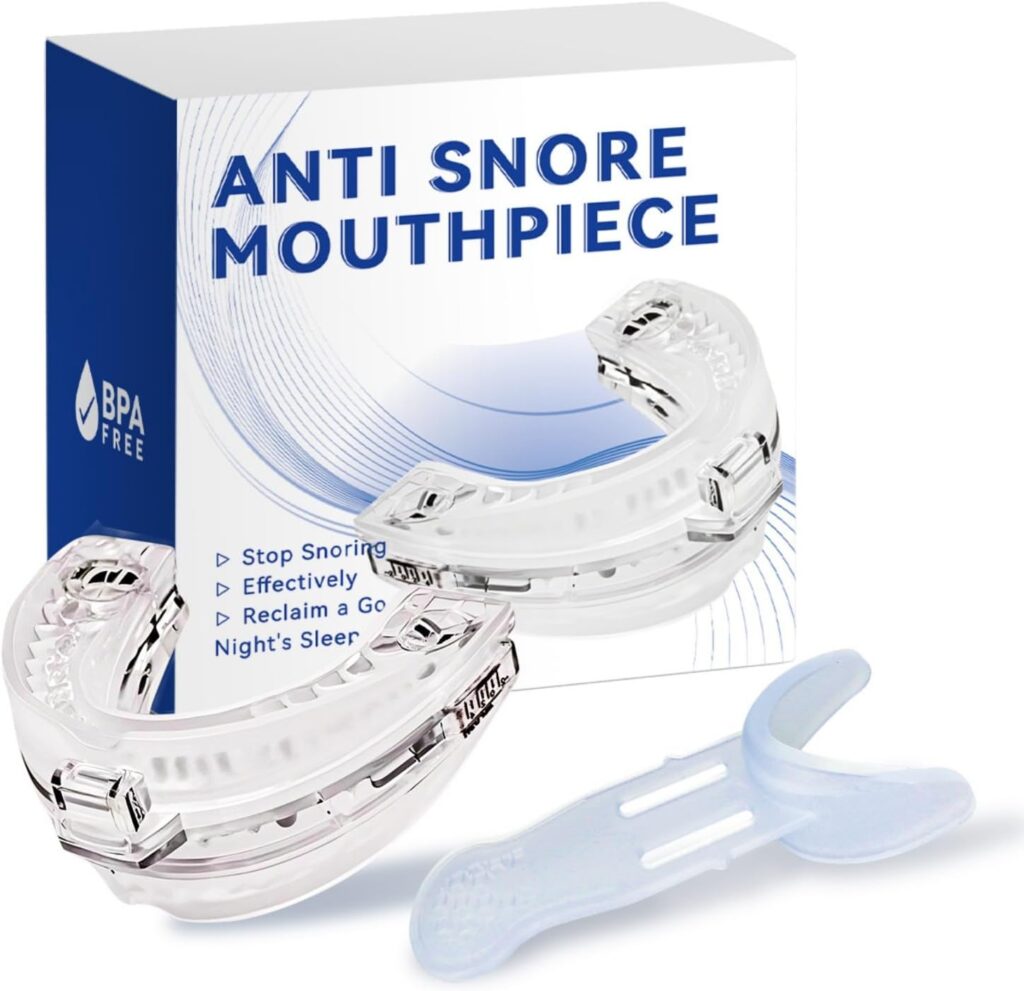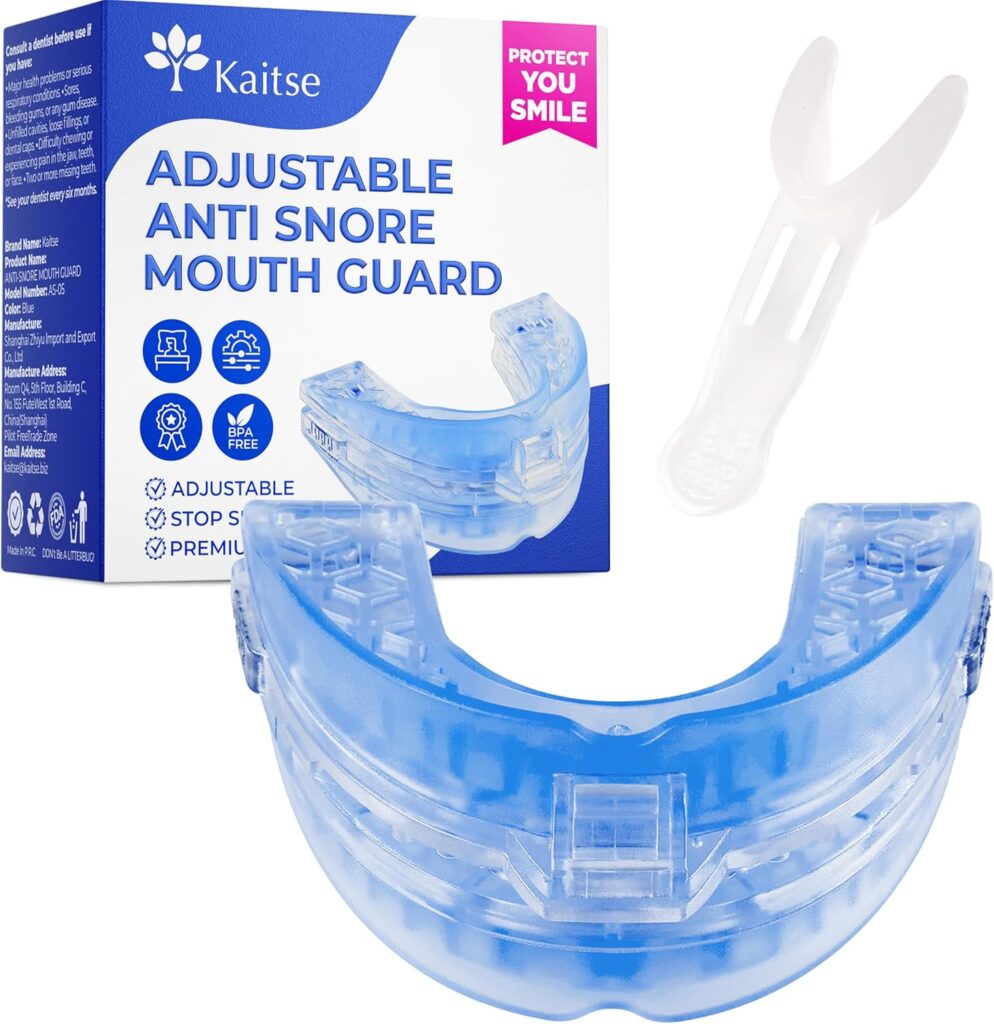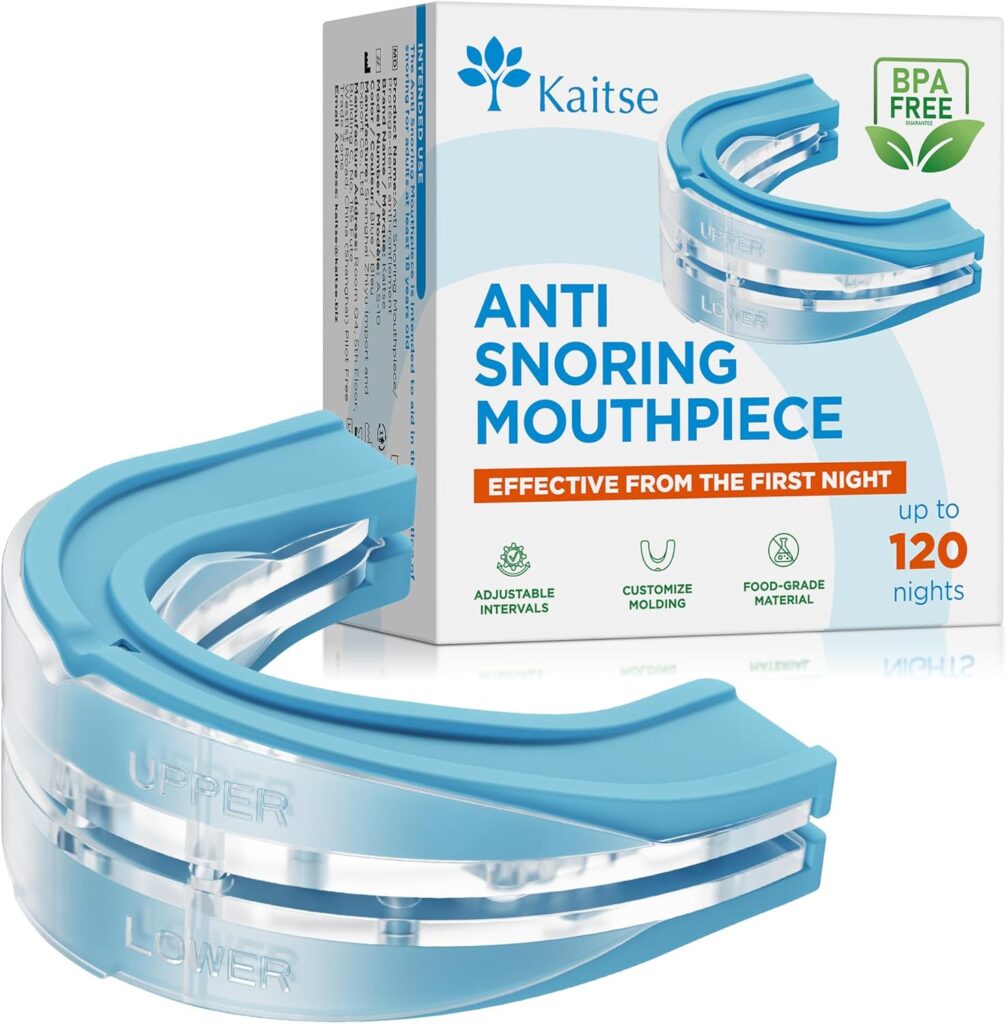
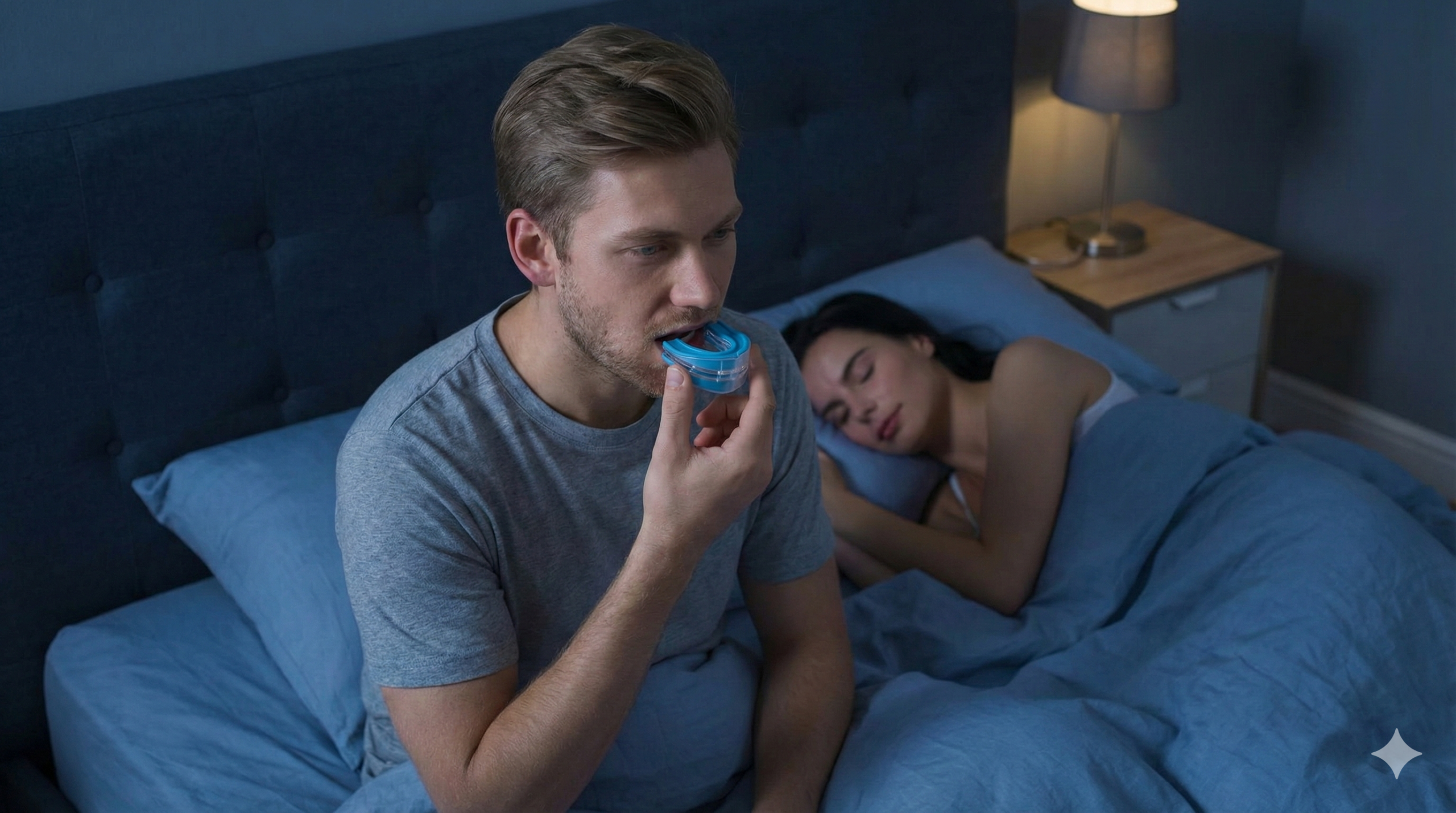
The anti-snoring mouthguard, also known as a mandibular advancement device, is today one of the most popular solutions for reducing mild to moderate snoring. Unlike sprays, nasal strips, or specialized pillows, it acts directly on the mechanics of the airways. But how does it actually work? And why is it effective for some people, but not for others?
Understanding how it works helps determine if this solution is suitable for your situation.
The mechanism of snoring
To understand the usefulness of the mouthguard, we must first return to the most common cause of snoring: partial obstruction of the upper airways during sleep.
When you sleep, the body’s muscles relax, including those of the tongue and throat. In some people, this relaxation causes the tongue to fall backward. The air passage then becomes narrower. Air passing through this reduced space causes vibrations of the soft tissues — these vibrations produce the sound of snoring.
The problem is therefore mechanical.
The principle of mandibular advancement
The anti-snoring mouthguard works by slightly advancing the lower jaw (mandible). This movement creates three important effects:
- It increases the space behind the tongue.
- It reduces the collapse of soft tissues.
- It stabilizes the upper airways.
By holding the jaw in a slightly advanced position during the night, the device reduces resistance to airflow. Less resistance means fewer vibrations and therefore less snoring.
This principle has been used for years in sleep medicine, particularly for certain cases of mild to moderate obstructive apnea (under medical supervision).
Why it works for many people
People with a naturally slightly recessed jaw are particularly prone to snoring. During the day, the muscles compensate for this anatomical configuration. But at night, when the body relaxes, the breathing space narrows.
The mouthguard compensates for this anatomical predisposition.
It is particularly effective if:
- You snore more on your back
- Your partner notices your mouth opening during sleep
- Nasal strips have not yielded results
- Your snoring is not primarily related to significant nasal congestion
Conversely, if your snoring is caused by a significant chronic nasal problem, a complementary solution might be necessary.
Different types of mouthguards
There are several categories on the market:
Thermoformable models (boil and bite)
These models soften in hot water and adapt to your teeth. They are accessible, affordable, and often a good first option for testing the principle of mandibular advancement.
Adjustable models
They allow for gradual increase of jaw advancement. This can improve comfort and effectiveness. This category is generally more recommended for regular use.
Custom-made models
Made by a dentist, they offer a precise fit. They are more expensive, but often more comfortable in the long term.
In our shop, we prioritize certified and well-rated adjustable models to offer a balance between effectiveness, comfort, and accessibility.
The adaptation period
It is normal to feel slight jaw tension during the first few nights. The body needs to get used to this new position.
Most users adapt within a few days to a week. Choosing an adjustable model allows for gradual progression, which significantly improves comfort.
A poorly fitted device is the main reason for abandonment. It is therefore essential to follow the instructions and select a quality model.
Expected benefits
When adapted to the cause of snoring, a mouthguard can:
- Significantly reduce snoring intensity
- Improve sleep quality
- Reduce morning fatigue
- Reduce marital tension
- Improve concentration and daytime energy
Many users notice an improvement from the first few nights.